Class 10 . Mathematics . Mathematics . Arithmetic Progressions
Chapter 5: Arithmetic Progressions
Ch 5
Mathematics
Class 10
Introduction & Arithmetic Progressions
Patterns in Everyday Life

Arithmetic Progressions
Arithmetic progression (AP) — A list of numbers in which each term after the first is obtained by adding the same fixed number to the preceding term.
Terms and Common Difference
- Terms: The numbers in the list are called terms; write them as \(a_1, a_2, a_3, \ldots\).
- First term: \(a_1\) (often written \(a\)) is the first term; \(a_n\) is the \(n\)th term.
- Common difference: The fixed number added at each step is \(d\); it can be positive, negative, or zero.
- AP test: Consecutive differences must all be equal. For example, \(1, 2, 3, 4, \ldots\) and \(100, 70, 40, 10, \ldots\) are APs.
- Zero difference: A constant list such as \(3, 3, 3, \ldots\) is an AP with \(d=0\).
Subtract a term from the term immediately after it.
A list is an AP if and only if \(a_{k+1}-a_k\) has the same value for every pair of consecutive terms. Checking one difference is enough only when the list is already known to be an AP.
Starting with first term \(a\), add the common difference repeatedly.
| Point | Finite AP | Infinite AP |
|---|---|---|
| Terms | Has a fixed number of terms | Continues without end |
| Last term | Has a last term | Has no last term |
| Examples | \(147, 148, \ldots, 157\) | \(1, 2, 3, 4, \ldots\) |
Recognising APs in Context
- Temperatures: \(-3.1, -3.0, -2.9, \ldots, -2.5\) has \(d=0.1\).
- Loan balance: Paying Rs. 50 from Rs. 1000 each month gives \(950, 900, 850, \ldots, 50\), with \(d=-50\).
- Prizes: \(200, 250, 300, \ldots, 750\) has \(d=50\).
- Savings totals: Saving Rs. 50 each month gives totals \(50, 100, 150, \ldots, 500\), with \(d=50\).
Test Whether a List Is an AP
- Find the difference between the second term and the first.$$a_2-a_1$$
- Find the differences for each following consecutive pair.$$a_3-a_2,\ a_4-a_3,\ \ldots$$
- If all differences are equal, the list is an AP; that shared value is \(d\).$$a_{k+1}-a_k=d$$
Does \(4, 10, 16, 22, \ldots\) form an AP? If so, find the next two terms.
- Check the consecutive differences in the list \(4, 10, 16, 22, \ldots\).$$10-4=6$$
- Compare the next differences; they are equal, so the list is an AP with common difference \(6\).$$16-10=6,\qquad 22-16=6$$
- Add \(6\) twice to find the next two terms.$$22+6=28,\qquad 28+6=34$$
Subtract in the order “following term minus preceding term.” For \(6, 3, 0, -3, \ldots\), \(d=3-6=-3\), not \(6-3\).
For \(1, -1, -3, -5, \ldots\), determine whether it is an AP and find the next two terms.
Does \(-2, 2, -2, 2, -2, \ldots\) form an AP?
For the AP \(\frac{3}{2}, \frac{1}{2}, -\frac{1}{2}, -\frac{3}{2}, \ldots\), state the first term and common difference.
Quick recap
- An AP is a list with a constant difference between consecutive terms.
- The common difference is \(d=a_{k+1}-a_k\); it may be positive, negative, or zero.
- An AP is determined by its first term \(a\) and common difference \(d\).
- The general form is \(a, a+d, a+2d, a+3d, \ldots\).
- Finite APs have a last term; infinite APs do not.
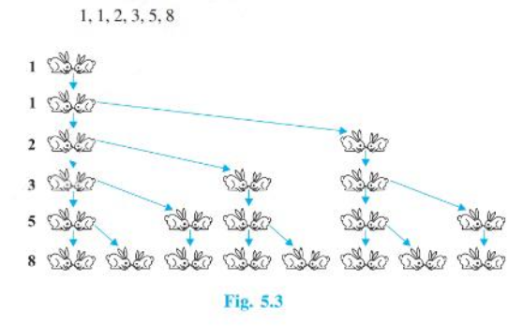
- A list with changing consecutive differences, such as \(1, 1, 2, 3, 5, \ldots\), is not an AP.
nth Term Of An AP
General term of an AP
The \(n\)th term of an AP is the first term plus \(n-1\) common differences.
Use the general term to find a term, determine its position, or find the number of terms.
Using the nth-term formula
- Identify the first term \(a\), common difference \(d\), and the required position \(n\) (or given term value).
- Substitute the known values into \(a_n=a+(n-1)d\).
- Simplify; if finding the position, solve for \(n\) and check that it is a positive integer.
Find the 10th term of \(2,7,12,\ldots\).
- Find the 10th term of the AP \(2,7,12,\ldots\). The first term is \(2\) and the common difference is \(7-2=5\).
- Apply the nth-term formula.$$a_{10}=2+(10-1)\times5$$
- Simplify.$$a_{10}=2+45=47$$
Do not use \(nd\) in place of \((n-1)d\): the first term already contributes \(a\), so only \(n-1\) common differences are added.
Finding a term's position and checking membership
In the AP \(21,18,15,\ldots\), which term is \(-81\)? Is \(0\) a term?
The 3rd term of an AP is \(5\) and the 7th term is \(9\). Find the AP.
Applications of the nth term
To find the \(k\)th term from the end, either count back from the total number of terms or reverse the AP.
Example: counting from the end
- Given AP: \(10,7,4,\ldots,-62\) has \(a=10\), \(d=-3\), and \(l=-62\).
- Number of terms: \(-62=10+(n-1)(-3)\) gives \(n=25\).
- 11th from the end: Its position from the beginning is \(25-11+1=15\); the term is \(a_{15}=10+14(-3)=-32\).
- Reverse method: The reversed AP starts at \(-62\) with common difference \(3\); its 11th term is \(-62+10(3)=-32\).
Check whether \(301\) is a term of \(5,11,17,23,\ldots\).
Quick recap
- For an AP with first term \(a\) and common difference \(d\), \(a_n=a+(n-1)d\).
- Find the common difference by subtracting consecutive terms.
- To test whether a value is in an AP, solve for \(n\) and check that it is a positive integer.
- Use known terms to form equations and determine unknown values of \(a\) and \(d\).
- If there are \(m\) terms, the last term is \(l=a+(m-1)d\).
- The \(k\)th term from the end is \(a_{m-k+1}=l-(k-1)d\).
Sum Of First N Terms Of An A
Arithmetic progression (AP) — An AP is a sequence in which each term after the first is obtained by adding the same common difference \(d\) to the preceding term.
Pairing Terms to Find a Sum
The pairing idea
- Pairing: In an AP, adding terms from opposite ends gives equal pair sums because the first-plus-last, second-plus-second-last, and so on are equal.
- Example: For \(1+2+\cdots+100\), each opposite-end pair sums to \(101\), so the total is \(\frac{100\times101}{2}=5050\).
Sum of the First n Terms
Sum of the first n terms — The sum of the first \(n\) terms of an AP is denoted by \(S_n\).
Writing the AP forwards and backwards gives corresponding sums of \(a+l\), where \(a\) is the first term and \(l\) the last term. Thus, \(2S_n=n(a+l)\).
Use the first form when \(a\) and \(d\) are known; use the second when the first and last terms are known.
Finding the sum of an AP
- Identify the first term, common difference and number of terms.$$a,\quad d,\quad n$$
- Substitute these values into the sum formula.$$S_n=\frac{n}{2}\left[2a+(n-1)d\right]$$
- Simplify and state the sum with its appropriate units, if any.$$S_n=\text{calculated sum}$$
Shakila deposits Rs. 100 on her daughter's first birthday, increasing the deposit by Rs. 50 each birthday. Find the total deposited by the 21st birthday.
- Identify the AP values.$$a=100,\quad d=50,\quad n=21$$
- Substitute into the sum formula.$$S_{21}=\frac{21}{2}\left[2(100)+(21-1)(50)\right]$$
- Simplify.$$S_{21}=\frac{21}{2}(200+1000)=12600$$
Using the Sum Formula
The \(n\)th term is the difference between the sum of the first \(n\) terms and the sum of the first \(n-1\) terms.
Unknown quantities and special cases
- Finding an unknown: The sum formula contains \(S_n\), \(a\), \(d\) and \(n\); knowing any three lets you find the fourth.
- Positive integers: \(1+2+\cdots+n=\frac{n(n+1)}{2}\); the first \(1000\) positive integers sum to \(500500\).
- Given nth-term rule: If \(a_n=3+2n\), the terms begin \(5,7,9,\ldots\); this is an AP with \(a=5\), \(d=2\), and \(S_{24}=672\).
- Uniform increase: If production rises by a fixed amount each year, yearly production forms an AP. Given \(a_3=600\) and \(a_7=700\), \(a=550\), \(d=25\), \(a_{10}=775\), and \(S_7=4375\).
Find the sum of the first \(22\) terms of \(8,3,-2,\ldots\).
An AP has first term \(10\) and \(S_{14}=1050\). Find its 20th term.
How many terms of \(24,21,18,\ldots\) must be taken so their sum is \(78\)?
Arithmetic Mean
If \(a,b,c\) are in AP, the middle term \(b\) is the arithmetic mean of the other two.
Quick recap
- Pairing opposite ends of an AP gives equal sums.
- Use \(S_n=\frac{n}{2}[2a+(n-1)d]\) when the common difference is known.
- Use \(S_n=\frac{n}{2}(a+l)\) when the last term is known.
- Find a term from consecutive sums using \(a_n=S_n-S_{n-1}\).
- The first \(n\) positive integers sum to \(\frac{n(n+1)}{2}\).
- If \(a,b,c\) are in AP, then \(b=\frac{a+c}{2}\).
Formula sheet
Mathematics — ALL CHAPTERS
1
Real Numbers
2
Polynomials
3
Pair Of Linear Equations In Two Variables
4
Quadratic Equations
5
Arithmetic Progressions
6
Triangles
7
Coordinate Geometry
8
Introduction To Trigonometry
9
Some Applications Of Trigonometry
10
Circles
11
Areas Related To Circles
12
Surface areas And Volumes
13
Statistics
14
Probability