Origin Life Evidence
Theories of Origin of Life
Several theories explain how life began on Earth. The Abiogenesis theory suggested life arose spontaneously from non-living matter, but was disproved by Louis Pasteur who demonstrated life comes from pre-existing life. The Biogenesis theory states life originates only from existing life forms. The Cosmic Theory or Panspermia proposes life came to Earth from spores in space. The Special Creation theory attributes life to a supernatural creator. The Chemical Evolution theory by Oparin and Haldane suggests life formed gradually from inorganic molecules through chemical reactions.
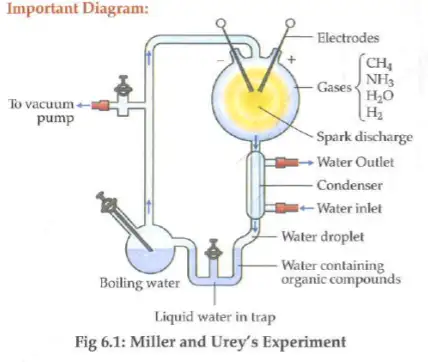
Urey-Miller Experiment
This experiment simulated early Earth conditions with gases like methane, ammonia, hydrogen, and water vapor, and electric sparks to mimic lightning. It produced amino acids and organic compounds, supporting chemical evolution as a plausible origin of life.
Evidence of Evolution
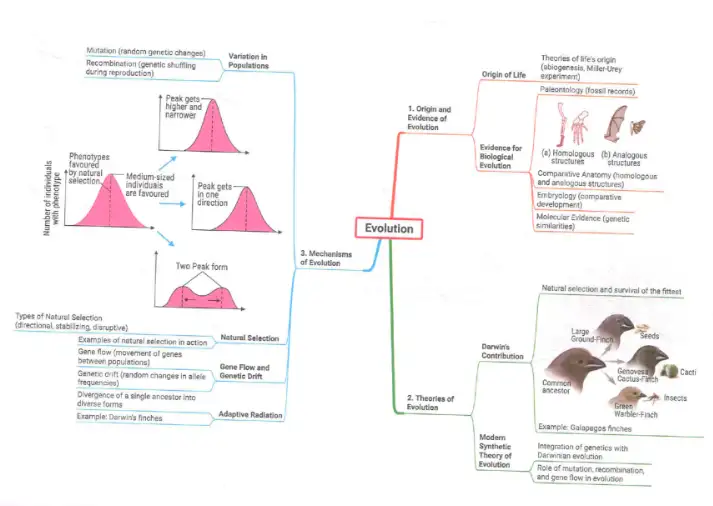
Evolution is supported by multiple evidences including fossils, comparative anatomy, embryology, molecular biology, and biogeography. Fossils show changes over geological time. Homologous organs indicate common ancestry, while analogous organs show convergent evolution. Embryological similarities suggest relatedness. Molecular similarities in DNA and proteins confirm evolutionary relationships. Adaptive radiation demonstrates species diversification from common ancestors.
Solved Examples
Example 1
Select two pairs from the following that exhibit divergent evolution. Give reasons for your answers.
(i) Forelimbs of cheetahs and mammals
(ii) Flippers of dolphins and penguins
(iii) Wings of butterflies and birds
(iv) Forelimbs of whales and mammals
Answer: The pairs exhibiting divergent evolution are:
(i) Forelimbs of cheetahs and mammals
(iv) Forelimbs of whales and mammals
These pairs have similar bone structures but perform different functions, indicating they evolved from a common ancestor but adapted differently to their environments.
Practice Set
- Level 1: Define homologous and analogous organs with examples.
- Level 2: Explain the significance of the Urey-Miller experiment in understanding the origin of life.
- Level 3: Discuss how fossil evidence supports the theory of evolution, citing specific examples.
Answer Key
Level 1: Homologous organs have similar structure but different functions (e.g., human hand and bat wing). Analogous organs have similar functions but different structures (e.g., wings of insects and birds).
Level 2: The Urey-Miller experiment demonstrated that organic molecules necessary for life could form under early Earth conditions, supporting chemical evolution as a plausible origin of life.
Level 3: Fossils provide chronological evidence of species changes over time. For example, Archaeopteryx shows traits of both reptiles and birds, indicating transitional forms in evolution.
Evolution Theories Mechanisms
Darwinism and Natural Selection
Charles Darwin proposed natural selection as the mechanism of evolution, where organisms better adapted to their environment survive and reproduce. This leads to gradual changes in populations over generations.
Modern Synthetic Theory
This theory combines Darwinian natural selection with Mendelian genetics, explaining evolution as changes in allele frequencies within populations due to mutation, genetic recombination, genetic drift, natural selection, and isolation.
Hardy-Weinberg Principle
This principle states that allele frequencies in a large, randomly mating population remain constant if no evolutionary forces act. Deviations indicate evolution.
Solved Examples
Example 2
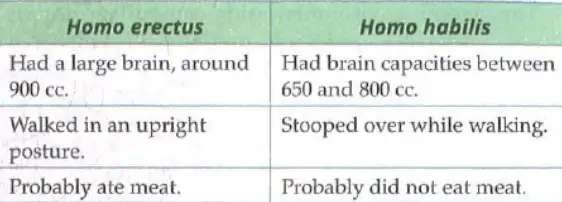
Write two differences between Homo erectus and Homo habilis.
Answer:
- Homo erectus had a larger brain capacity (900 cc) compared to Homo habilis (650-800 cc).
- Homo erectus walked upright with good posture, while Homo habilis had a stooped gait.
Practice Set
- Level 1: What is natural selection and how does it affect populations?
- Level 2: List the five factors that can disturb Hardy-Weinberg equilibrium.
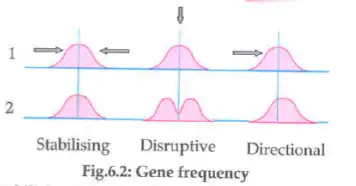
- Level 3: Explain the difference between stabilizing, directional, and disruptive selection with examples.
Answer Key
Level 1: Natural selection is the process where individuals with favorable traits survive and reproduce more, changing population traits over time.
Level 2: The five factors are gene migration, genetic drift, mutation, genetic recombination, and natural selection.
Level 3: Stabilizing selection favors average traits, reducing variation; directional selection favors one extreme trait, shifting the population; disruptive selection favors both extremes, creating two distinct groups.
Quick Reference Table
Theories of Origin of Life: Abiogenesis (disproved), Biogenesis, Cosmic Theory (Panspermia), Special Creation, Chemical Evolution (Oparin-Haldane).
Urey-Miller Experiment: Simulated early Earth conditions producing amino acids, supporting chemical evolution.
Evidence of Evolution: Fossils, Homologous and Analogous organs, Embryology, Molecular biology, Adaptive radiation.
Darwinism: Natural selection leads to survival of the fittest and evolution.
Modern Synthetic Theory: Evolution as changes in allele frequencies due to mutation, recombination, drift, selection, isolation.
Hardy-Weinberg Principle: Allele frequencies remain constant without evolutionary forces; p² + 2pq + q² = 1.
Types of Natural Selection: Stabilizing (favors average), Directional (favors one extreme), Disruptive (favors both extremes).
Human Evolution: Dryopithecus, Ramapithecus, Australopithecus, Homo habilis, Homo erectus, Neanderthal, Homo sapiens.
Common Mistakes and Misconceptions
- Confusing homologous organs (same structure, different function) with analogous organs (different structure, same function).
- Believing evolution creates new traits instantly rather than acting on existing variations.
- Mixing up allopatric (geographical isolation) and sympatric (reproductive barriers) speciation.
- Assuming fossils from different time periods or unrelated lineages are direct ancestors.
- Thinking natural selection and evolution are the same; natural selection is a mechanism of evolution.
- Misunderstanding Hardy-Weinberg equilibrium conditions and factors that disturb it.
Glossary
- Adaptive Radiation: Evolution of different species from a common ancestor in different environments.
- Allele Frequency: Proportion of a specific allele among all alleles in a population.
- Analogous Organs: Organs with similar function but different structure and origin.
- Biogenesis: Theory that life arises from existing life.
- Convergent Evolution: Unrelated species evolve similar traits due to similar environments.
- Divergent Evolution: Related species evolve different traits due to different environments.
- Fossils: Preserved remains or traces of ancient organisms.
- Genetic Drift: Random changes in allele frequencies in a population.
- Hardy-Weinberg Equilibrium: Condition where allele frequencies remain constant in a population.
- Homologous Organs: Organs with similar structure and origin but different functions.
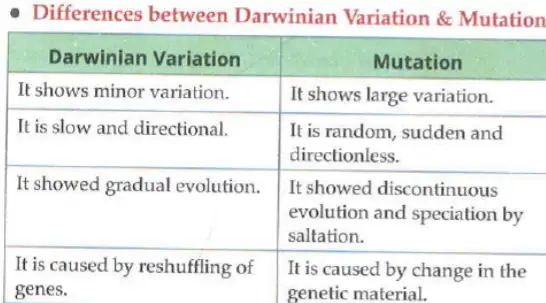
- Mutation: Change in genetic material that can lead to variation.
- Natural Selection: Process where organisms better adapted to environment survive and reproduce.
- Speciation: Formation of new species from existing ones.
- Transitional Fossils: Fossils showing intermediate traits between ancestral and descendant species.
Biology — ALL CHAPTERS
1
Sexual Reproduction In Flowering Plants
2
Human Reproduction
3
Reproductive Health
4
Principles Of Inheritance And Variation
5
Molecular Basis Of Inheritance
6
Evolution
7
Human Health And Disease
8
Microbes In Human Welfare
9
Biotechnology : Principles And Processes
10
Biotechnology And Its Applications
11
Organisms And Populations
12
Ecosystem
13
Biodiversity And Conservation