Class 12 Humanities . History . Themes In Indian History Part I . Bricks Beads and Bones the Harappan Civilisation
Chapter 1: BRICKS, BEADS AND BONES THE HARAPPAN CIVILISATION
Ch 1
History
Class 12 Humanities
Introduction & Beginnings
The Harappan Civilisation and Archaeological Evidence
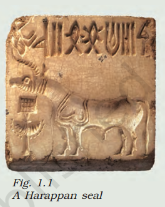
| Evidence | Interpretation | |
|---|---|---|
| What it means | Material remains found at sites, such as artefacts, bones and fields. | Conclusions archaeologists draw from those remains; these may change as evidence grows. |
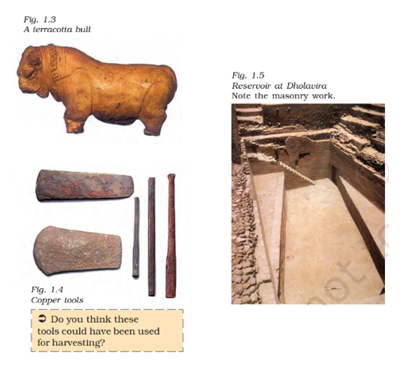
| Example | Terracotta bull figurines and plough models. | Oxen were probably used for ploughing. |
Terminology, Phases and Geographical Spread
Harappan Phases and Early Farming
- Around 7000 BCEEarly farming communities were present in the region.
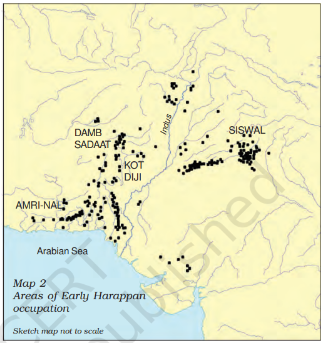
- 6000–2600 BCEEarly Harappan phase: the formative period.
- 2600–1900 BCEMature Harappan phase: the urban and most prosperous period.
- Around 1900 BCEThe decline of the civilisation began.
- 1900–1300 BCELate Harappan phase: the period of decline.
- 6000–1300 BCEOverall time span of the Harappan Civilisation given in the lecture.
Geographical Spread
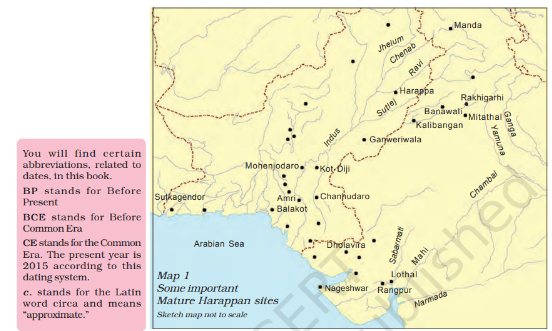
- Regions: Finds occur in Afghanistan, Baluchistan, Sind and Punjab in Pakistan, and in Jammu and Kashmir, Punjab, Haryana, Rajasthan, Uttar Pradesh, Gujarat and Maharashtra in India.
Harappan Settlements
Beginnings
Subsistence Strategies
Agricultural Technologies
- Steatite
- A stone used to make many Harappan seals.
- Archaeo-botanist
- A specialist who studies ancient plant remains.
- Archaeo-zoologist
- A specialist who studies animal remains from archaeological sites.
- Subsistence
- Ways people obtain food and meet basic needs.
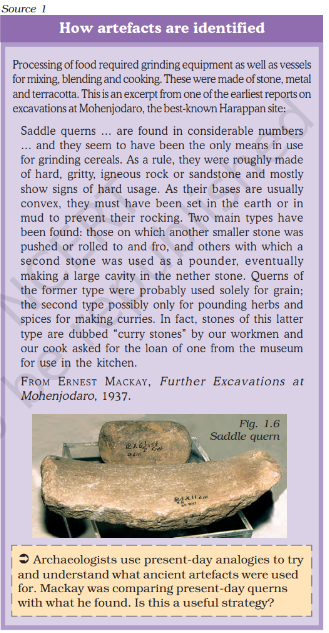
- Saddle quern
- A grinding stone used with a smaller handstone to process grain.
What evidence helps archaeologists reconstruct Harappan diet?
Name the five major Harappan cities identified in the lecture.
Give evidence for Harappan agricultural practices and water management.
Quick recap
- Harappan seals, pottery, tools and other remains are key sources for reconstructing the civilisation.
- The Early Harappan phase was formative; the Mature phase was urban and prosperous; the Late phase followed decline.
- More than 2,000 sites are known, with nearly two-thirds in the Saraswati basin.
- The Mature Harappan civilisation developed gradually from earlier farming and pastoral communities.
- Harappan diets included many crops, domesticated animals, fish and other animal foods.
- Plough models, field furrows, canals, wells and reservoirs offer clues to farming and irrigation.
Mohanjodaro a Planned Urban Centre
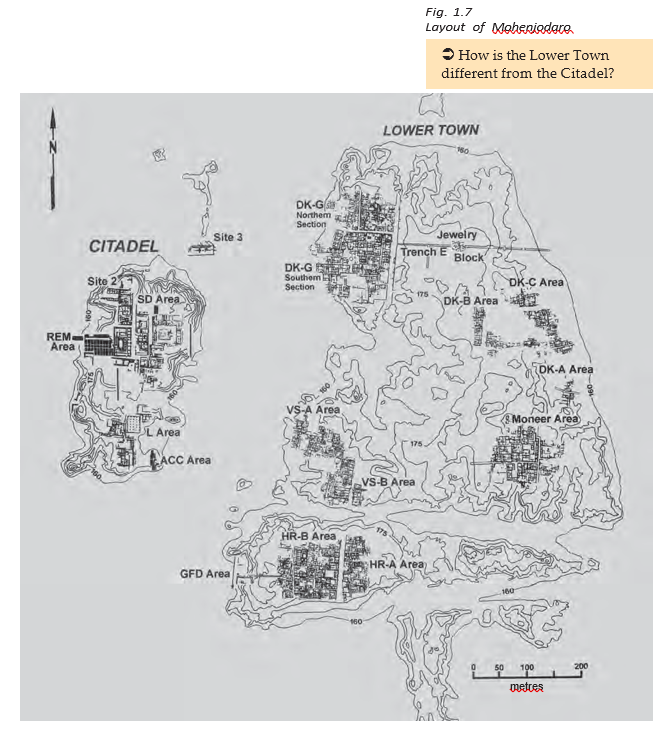
Mohenjo-daro: City Layout and Planning
Urban layout
- Urban centre: Mohenjo-daro is a major example of the Harappan civilisation’s planned cities; Harappa was the first site discovered.
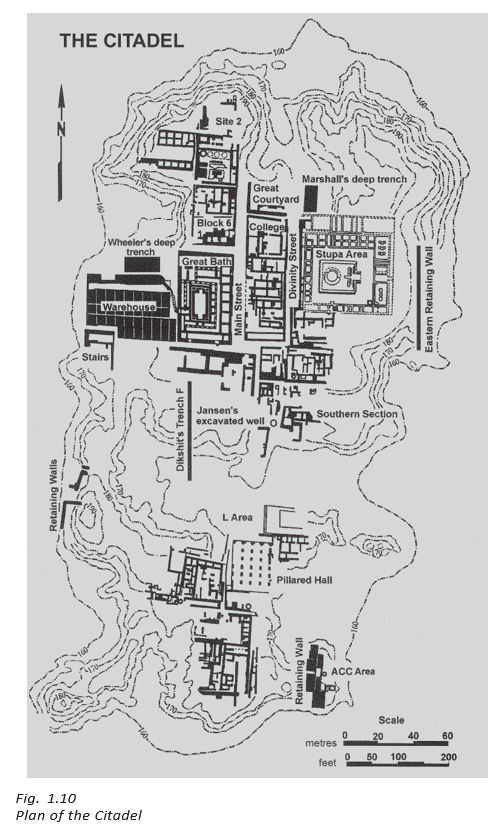
- Two sections: The smaller, higher Citadel and larger, lower Lower Town were physically separated by walls.
- Citadel platform: Its elevation came from buildings constructed on mud-brick platforms; the Lower Town was also walled.
- Construction scale: Platforms formed building foundations. At roughly $1\,m^3$ of earth per labourer per day, their construction required an estimated four million person-days.
- Planned space: Buildings were confined to the prepared platforms, suggesting the settlement was planned before construction began.
- Standard bricks: Sun-dried and baked bricks followed a standard ratio: length : breadth : height = $4:2:1$, used across Harappan settlements.
The Plight of Harappa
- Brick robbing: Harappa was badly damaged as bricks from its ancient structures were removed and reused.
- Alexander Cunningham: In 1875, the first Director-General of the Archaeological Survey of India (ASI) observed that enough bricks had been taken to lay about 100 miles of railway line between Lahore and Multan.
- Preservation: In contrast to Harappa, Mohenjo-daro was much better preserved.
Dates in the Lecture
- 1875Alexander Cunningham recorded the extensive removal of bricks from Harappa.
- 1948Ernest Mackay’s Early Indus Civilisation described the Harappan drainage system.
Laying Out Drains
Street planning and drainage
- Street pattern: Roads and streets followed an approximate grid, intersecting at right angles.
- Order of construction: Streets and their drains appear to have been laid out before houses were built along them.
- House connection: To discharge wastewater into street drains, each house needed at least one wall along a street.
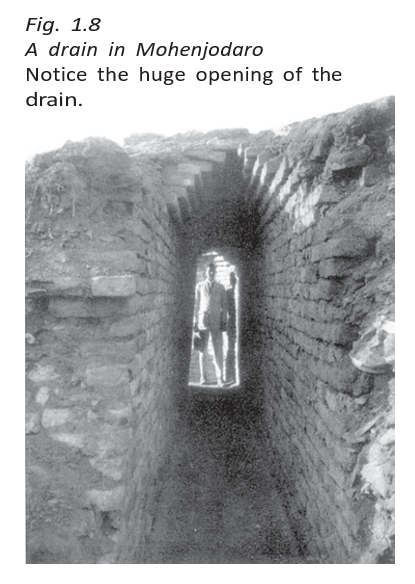
- Extensive system: Drains connected houses to street channels and were found in large cities and smaller settlements too.
Citadels Across Harappan Settlements
- Common pattern: Many Harappan settlements had a small, high western section and a larger, lower eastern section.
- Dholavira and Lothal: The whole settlement was fortified, and walls also separated sections within the town.
- Lothal’s Citadel: It stood on a raised area but was not walled off.
| Point | Common pattern | Dholavira and Lothal |
|---|---|---|
| Layout | Small, high western part and larger, lower eastern part | The entire settlement was fortified; internal sections could also be walled |
| Citadel | Usually the raised section | At Lothal, raised but not separately walled |
Domestic Architecture
Features of houses
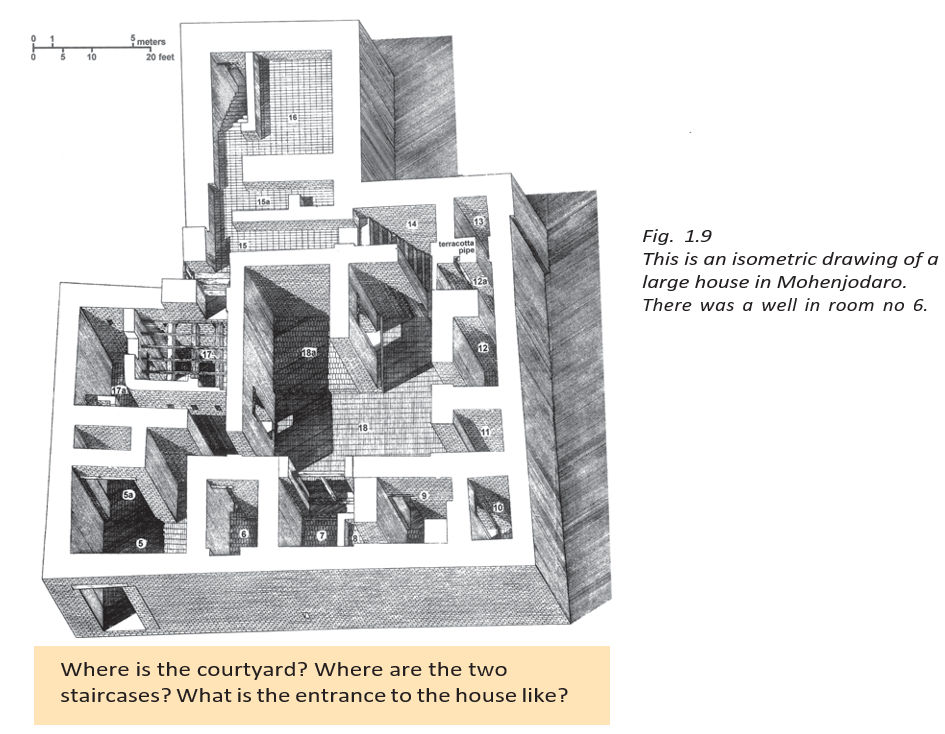
- Courtyard houses: Many homes had rooms arranged around a central courtyard, likely used for activities such as cooking and weaving, especially in hot, dry weather.
- Privacy: Ground-level walls had no windows, and the main entrance did not give a direct view into the interior or courtyard.
- Bathrooms: Each house had a brick-paved bathroom, with a drain passing through the wall to connect to street drainage.
- Upper levels: Staircase remains show that some houses had a second storey or roof access.
- Wells: Many houses had wells, sometimes in a room accessible from outside and possibly usable by passers-by. Mohenjo-daro had an estimated 700 wells.
The Harappan Drainage System
Harappan drainage system — A planned network of house and street drains that carried domestic wastewater from houses into street drains.
Construction and functioning
- Mackay’s assessment: Ernest Mackay called it “the most complete ancient system as yet discovered.”
- Main drains: Built from bricks set in mortar and covered with loose bricks that could be lifted for cleaning; limestone covers were used in some cases.
- House drains: Wastewater first entered a sump or cesspit, where solid matter settled; the remaining water flowed into the street drain.
- Cleaning access: Long channels had sumps at intervals to assist cleaning.
- Maintenance evidence: Heaps of mostly sandy debris beside drains suggest that cleared material was not always removed.
- Small settlements: The drainage system was not limited to major cities. At Lothal, houses used mud bricks while drains were made of burnt bricks.
Wastewater route
- House drain carries wastewater outward
- Sump or cesspit traps solid matter
- Liquid waste flows into the street drain
The Citadel: Public Structures
Warehouse and Great Bath
- Public-purpose evidence: The Citadel contained structures likely used for special public purposes, including a warehouse and the Great Bath.
- Warehouse: A massive building; its surviving lower portions were brick, while its upper parts were probably wooden and decayed.
- Great Bath: A large rectangular tank in a courtyard, surrounded by a corridor on all four sides.
- Waterproofing and access: Two flights of steps on the north and south led into the tank. Bricks set on edge and gypsum mortar made it watertight.
- Water supply and drainage: Rooms stood on three sides, including one with a large well; water from the tank flowed into a large drain.
- Nearby bathrooms: A smaller building north across a lane had eight bathrooms—four on each side of a corridor—with drains joining a corridor drain.
- Likely use: Its distinctive design and Citadel location led scholars to suggest that the Great Bath was used for a special ritual bath.
- Citadel
- The smaller, higher section of a Harappan city, often separated from the Lower Town by a wall.
- Lower Town
- The larger, lower section of a Harappan city.
- Sump or cesspit
- A chamber that trapped solid matter from wastewater before liquid flowed into the street drain.
- Great Bath
- A large, waterproofed tank in Mohenjo-daro’s Citadel, possibly used for ritual bathing.
What features show that Mohenjo-daro was a planned city?
Describe the main features of the Harappan drainage system.
Why do scholars think the Great Bath may have had a ritual use?
Quick recap
- Mohenjo-daro had a walled Citadel and a larger, walled Lower Town.
- Platforms, standardised 4:2:1 bricks and a grid street plan point to advance urban planning.
- Many homes had courtyards, private entrances, bathrooms, drains and access to wells.
- Covered drains used sumps to trap solids and were found in both large and small settlements; Mackay called them the most complete ancient system discovered.
- The Citadel contained a massive warehouse and the Great Bath, probably used for ritual bathing.
Tracking Social Differences & Finding Out About Craft Production
Tracking Social Differences: Burials
Looking for Luxuries
| Category | Typical features and examples | Distribution or interpretation |
|---|---|---|
| Utilitarian | Everyday objects made relatively easily from ordinary materials: querns, pottery, needles and flesh-rubbers. | Usually found throughout settlements. |
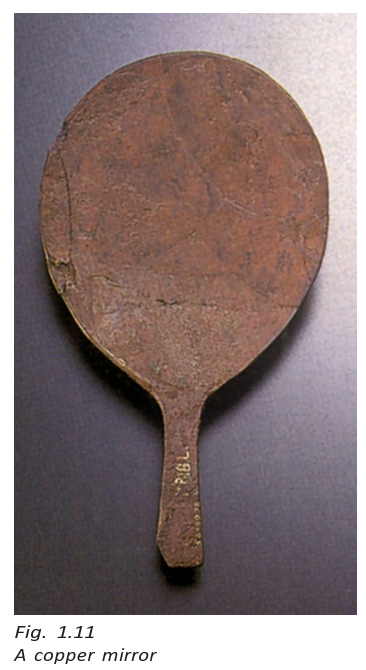
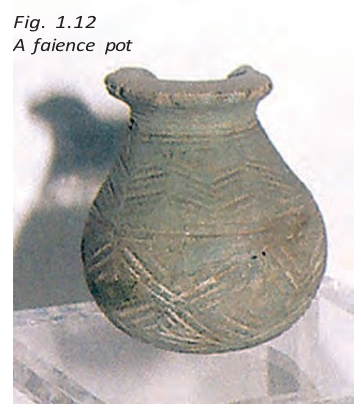
| Luxury | Often rare, made from costly non-local materials, or produced using complicated techniques; small faience pots are an example. | Rare valuable objects are generally concentrated in large settlements such as Mohenjodaro and Harappa. |
| Ambiguous cases | A spindle whorl could be used daily yet be made from a rare material such as faience. | An object’s material alone does not always establish whether it was a luxury. |
Distribution, gold and hoards
- Faience pots: Miniature pots, perhaps used as perfume bottles, are found mostly at Mohenjodaro and Harappa, and none are reported from small settlements such as Kalibangan.
- Gold: It was rare and probably precious; all gold jewellery found at Harappan sites was recovered from hoards.
- Hoards: Carefully stored objects, often kept in pots, could include jewellery or metal objects saved for reuse by metalworkers.
- Archaeological significance: If owners did not retrieve a hoard, its contents remained where deposited and could later be discovered.
Finding Out About Craft Production
Bead-making techniques
- Steatite: This soft stone was easy to work; beads could also be moulded from a paste of steatite powder, allowing varied shapes.
- Hard stones: These were shaped into more geometric forms. How steatite microbeads were made remains uncertain.
- Carnelian colour: Firing the yellowish raw material and beads at different production stages produced the red colour.
- Tools: Specialised drills used in bead production have been found at Chanhudaro, Lothal and Dholavira.
Carnelian bead production
- Fire the yellowish carnelian material at stages of production to develop its red colour.
- Chip nodules into rough shapes, then finely flake them into the desired form.
- Grind and polish the beads, then drill them.
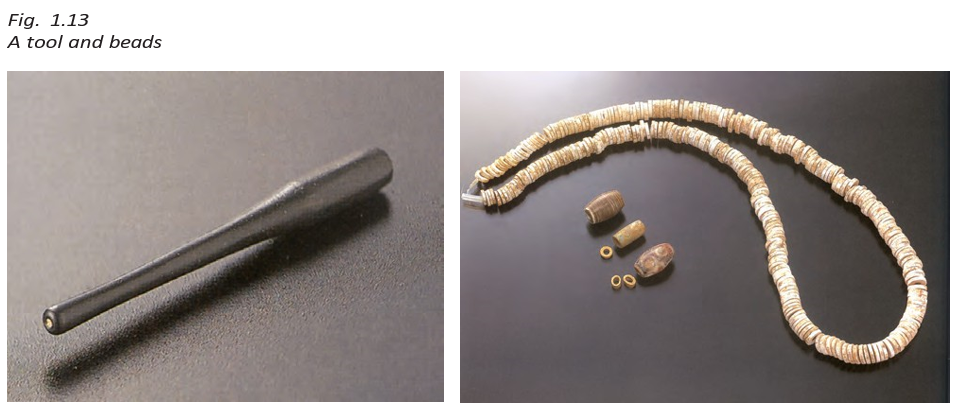
Specialised centres and exchange
- Shell-working centres: Coastal Nageshwar and Balakot specialised in shell objects such as bangles, ladles and inlay.
- Distribution: Shell products were taken to other settlements; finished goods such as beads from Chanhudaro and Lothal were likely transported to urban centres such as Mohenjodaro and Harappa.
Identifying Centres of Production
Archaeological indicators
- Evidence sought: Raw materials such as stone nodules, whole shells and copper ore; tools; unfinished objects; rejects; and waste.
- Waste: One of the strongest indicators of craft production. Cutting stone or shell leaves discarded fragments at the production site.
- Reuse: Larger waste pieces could be used to make smaller objects, while minuscule fragments were usually left in the work area.
- Where production occurred: Craft work took place in small specialised centres and in large cities such as Mohenjodaro and Harappa.
- Faience
- A material made from ground sand or silica mixed with colour and a gum, then fired.
- Steatite
- A soft stone used to make beads, including beads moulded from powdered-stone paste.
- Hoard
- A collection of objects carefully stored, often in a container, and sometimes left unretrieved.
- Microbeads
- Very small beads; the method used to make steatite examples remains uncertain.
How can burials help archaeologists study social differences, and what are the limits of this evidence?
What evidence do archaeologists use to identify a craft-production centre?
Quick recap
- Burials and grave goods offer clues to social differences, but the evidence is not conclusive.
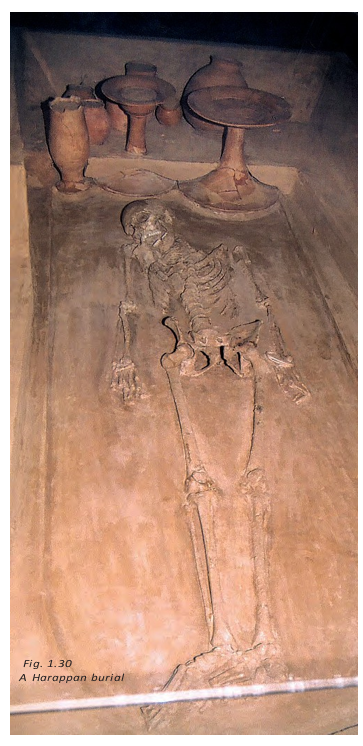
- Harappan graves generally contained few precious objects; jewellery occurred in burials of both men and women.
- All gold jewellery found at Harappan sites was recovered from hoards.
- Rarity, costly materials, complex production and settlement distribution help identify possible luxury goods.
- Chanhudaro was a small, specialised craft settlement; coastal Nageshwar and Balakot specialised in shell-working.
- Raw materials, tools, unfinished goods and especially waste help archaeologists locate craft production.
Strategies for Procuring Materials
Transport and procurement strategies
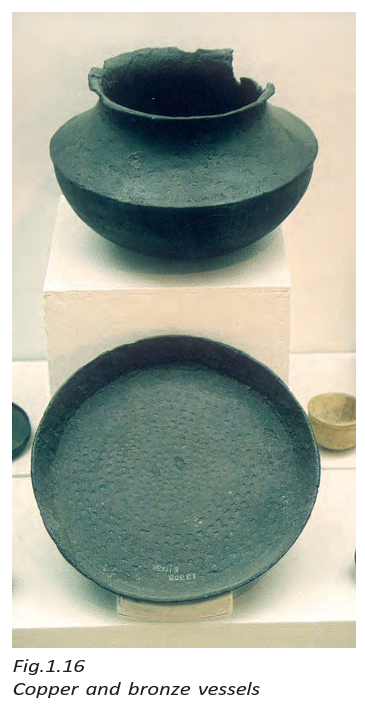
Materials from the subcontinent and beyond
Expeditions and regional contacts
- Expeditions: Harappans may have sent groups to Khetri in Rajasthan for copper and to south India for gold.
- Local communities: Such journeys likely created communication and exchange with people in resource-rich regions.
- Evidence of contact: Steatite microbeads and other Harappan artefacts have occasionally been found in these areas.
- Ganeshwar-Jodhpura culture: The Khetri region had distinctive non-Harappan pottery and many copper objects; its inhabitants may have supplied copper to the Harappans.
Contact with distant lands
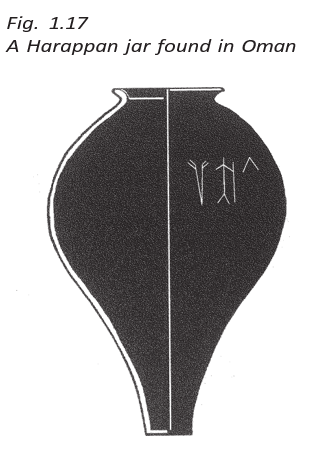
Mesopotamia and Gulf connections
- Mesopotamian texts: Texts from the third millennium BCE mention copper from Magan, probably Oman; copper found at Mesopotamian sites also contains traces of nickel.
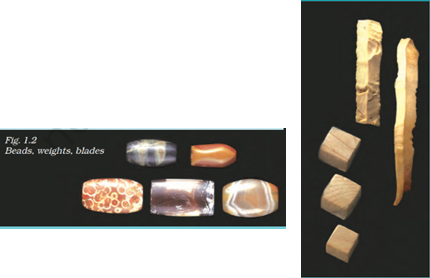
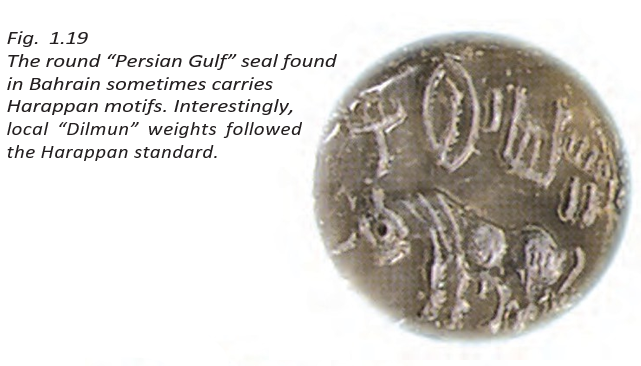
- Archaeological finds: Harappan seals, weights, dice and beads indicate long-distance contacts.
- Named regions: Mesopotamian records refer to Dilmun (probably Bahrain), Magan (perhaps Oman) and Meluhha (possibly the Harappan region).
- Meluhha’s products: Texts associate it with carnelian, lapis lazuli, copper, gold and varieties of wood.
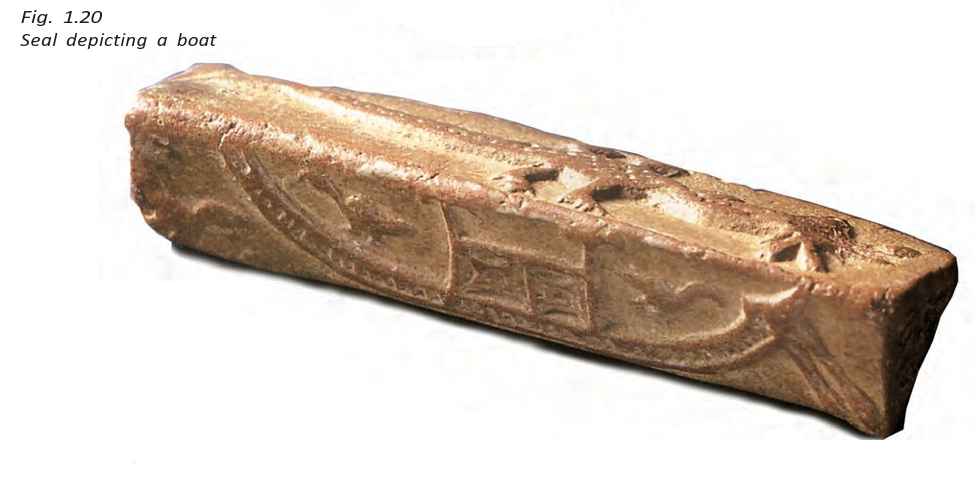
- Seafaring evidence: Mesopotamian texts describe Meluhha as a land of seafarers; seals also depict ships and boats.
- Bull motif: A Mesopotamian cylinder seal has a bull motif thought by some to derive from the Indus region.
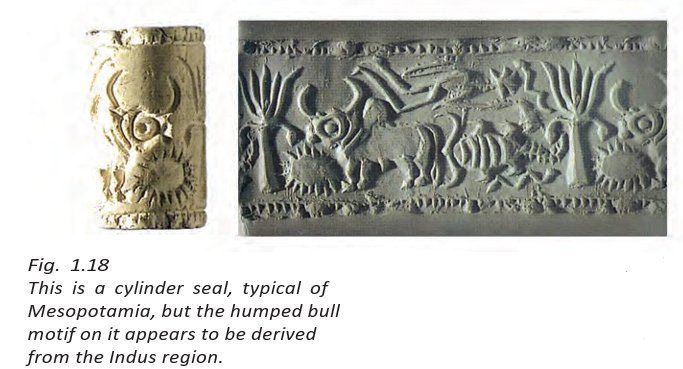
Textual evidence for distant trade
- Third millennium BCEMesopotamian texts refer to copper from Magan and to Meluhha and other regions.
- Lapis lazuli
- A valued blue stone obtained near Shortughai.
- Ganeshwar-Jodhpura culture
- A Khetri-region culture known for distinctive non-Harappan pottery and abundant copper objects.
- Magan
- A region named in Mesopotamian texts, possibly Oman.
- Dilmun
- A region named in Mesopotamian texts, probably the island of Bahrain.
- Meluhha
- A region named in Mesopotamian texts, possibly the Harappan region.
What evidence suggests contact between the Harappans and Oman?
What do Mesopotamian texts reveal about Harappan long-distance contacts?
Quick recap
- Harappans used local materials and procured other resources from distant regions.
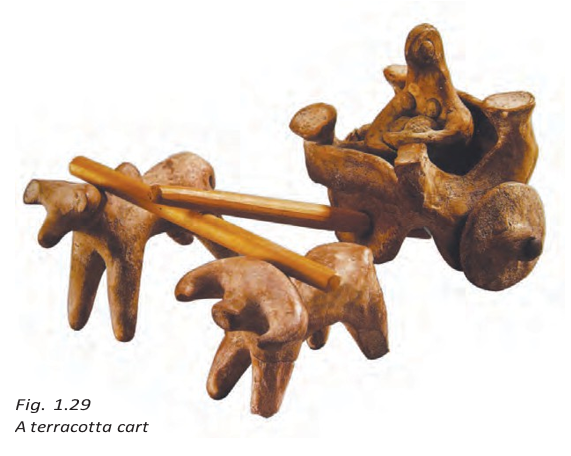
- Bullock-cart models and river, coastal and sea-route evidence indicate several transport options.
- Settlements such as Nageshwar, Balakot, Shortughai and Lothal were linked to nearby resources.
- Expeditions and contact with local communities may have secured copper and gold.
- Nickel traces and Harappan-marked jars provide evidence of contact with Oman.
- Mesopotamian texts identify Magan, Dilmun and Meluhha and list goods associated with Meluhha.
Seals, Script, Weights & Ancient Authority
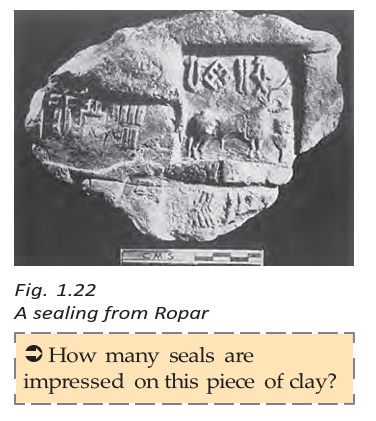
Seals and Sealings
The Harappan Script
The many inscribed objects do not prove that literacy was widespread: the script remains undeciphered, and the extent of literacy is uncertain.
Weights and Exchange
Evidence for Authority and Organisation
Palaces, Kings and Competing Interpretations
- Sealing
- An impression in wet clay made by pressing a seal, used to secure and identify a consignment.
- Harappan script
- An undeciphered, non-alphabetical writing system with about 375–400 signs.
- Chert
- A stone commonly used to make Harappan weights.
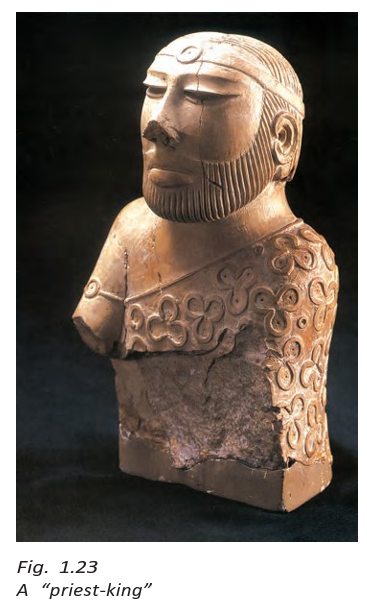
- “Priest-king”
- An archaeological label for a Harappan sculpted bust; it does not prove the person was a king or priest.
What functions did Harappan seals and sealings serve?
What evidence suggests the Harappan script was written from right to left?
Why is Harappan political authority difficult to identify?
Quick recap
- Sealings secured goods in transit and identified the sender.
- The undeciphered Harappan script had about 375–400 signs and was probably written right to left.
- Harappan weights were generally cubical chert pieces, with binary lower and decimal higher denominations.
- Standardised artefacts, bricks and planned settlements indicate coordination, but not who exercised authority.
- The “palace” and “priest-king” labels are interpretations; Harappan political organisation remains uncertain.
The End of the Civilisation
Decline and transformation
What changed?
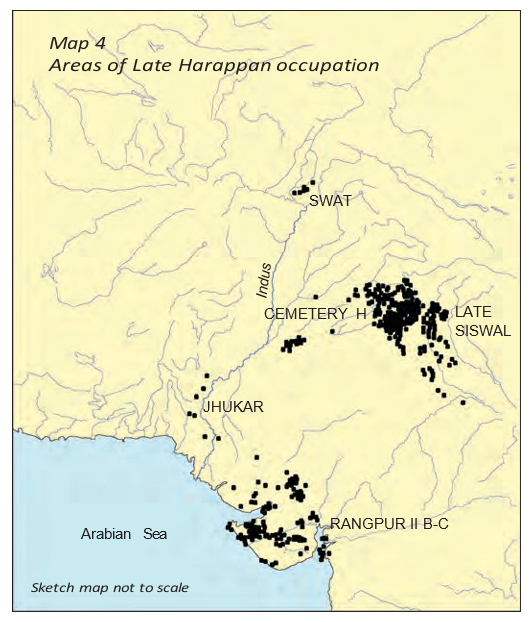
- Abandonment: By c. 1800 BCE, most Mature Harappan sites in areas such as Cholistan had been abandoned.
- New settlements: Population expanded into Gujarat, Haryana and western Uttar Pradesh.
- Material culture: After 1900 BCE, surviving sites show the disappearance of weights, seals and special beads; writing, long-distance trade and craft specialisation also disappeared.
- Urban life: Fewer materials were used to make fewer goods; house construction techniques deteriorated and large public structures were no longer built.
- Successor cultures: Settlements and artefacts point to a more rural way of life, known as Late Harappan or successor cultures.
Possible causes and the end of urban unity
Explanations for decline
- Suggested causes: Climate change, deforestation, excessive floods, shifting or drying rivers, and overuse of the landscape.
- Limits of explanations: Some causes may explain changes at particular settlements, but these explanations do not account for the collapse of the entire civilisation.
- Loss of unifying power: A strong unifying element—possibly the Harappan state—appears to have ended.
- Evidence of fragmentation: Seals, script, distinctive beads and pottery disappeared; standardised weights gave way to local weights, while cities declined or were abandoned.
- After the cities: The subcontinent did not develop new cities in a different region for over a millennium.
The proposed invasion and the evidence
From skeletons to the invasion theory
- Finds at Mohenjodaro: Sixteen skeletons, with ornaments still being worn, were found in one part of the city in 1925.
- John Marshall: His 1931 account described human bones found in Deadman Lane, including an adult skeleton and fragments of a small skull.
- R.E.M. Wheeler: In 1947, he connected the skeletons and Harappan fortifications with the Rigveda’s description of Indra as *puramdara* (fort-destroyer).
- Wheeler’s conclusion: He proposed that deliberate, large-scale destruction, possibly by Aryans, completed the civilisation’s decline.
| Evidence | Interpretation | |
|---|---|---|
| Skeletons | Human remains were found at Mohenjodaro, but they did not all come from the same period. | Wheeler treated them as evidence of a massacre; Dales argued that most were not evidence of one simultaneous slaughter. |
| City destruction | The latest city period showed no extensive burning or bodies of warriors with weapons. | Dales used the lack of widespread destruction evidence to challenge the massacre interpretation; this does not establish the broader cause of the city’s decline. |
| Fortified citadel | The citadel, the city’s only fortified part, showed no evidence of a final defence. | Dales argued that this evidence did not support a final defence of the city. |
Reassessment by George Dales
- Dales’s challenge: In the 1960s, archaeologist George Dales questioned the claim of a massacre at Mohenjodaro.
- His findings: Only a couple of skeletons seemed to suggest slaughter; most were found in contexts consistent with careless or disrespectful burials.
- Key point: Re-examining archaeological evidence can overturn earlier interpretations.
Archaeogenetic research at Rakhigarhi
Study and reported findings
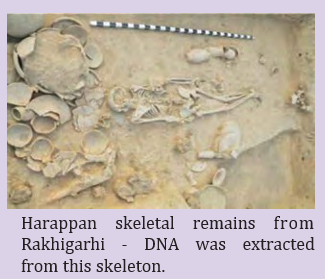
- Site: Rakhigarhi, in Haryana’s Hisar district, is described as the largest Harappan city, covering about 550 hectares.
- Research: DNA from excavated skeletons was analysed by a team from Deccan College, Pune, the Centre for Cellular and Molecular Biology, Hyderabad, and Harvard Medical College.
- Genome finding: The ancient Harappan genome analysed in the study lacked ancestry from steppe pastoralists or Iranian farmers.
- Reported ancestry: The study traced Harappan genetic roots to the region, back to 10,000 BCE, and reported genetic continuity with much of today’s South Asian population.
- Population contact: The study identified a small genetic contribution linked to trade and cultural contact with distant regions; it also argued that people arriving from elsewhere were absorbed into Indian society.
- Migration claim: The researchers interpreted genetic and cultural continuity as evidence against large-scale immigration by the so-called Aryans.
- Wider spread: As Harappans moved towards Iran and Central Asia, the study proposed that their genes also spread there.
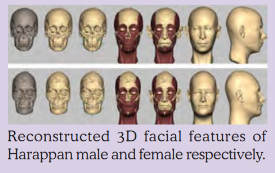
- Facial reconstruction: Reconstructed male and female facial features were reported to resemble people of modern Haryana, suggesting regional continuity over 5,000 years.
Key dates
- 10,000 BCEThe Rakhigarhi genetic study traced Harappan genetic roots in the region back to this date.
- After 1900 BCESurviving Harappan sites show major changes in material culture and urban life.
- c. 1800 BCEMost Mature Harappan sites in regions such as Cholistan had been abandoned.
- 1925Sixteen skeletons with ornaments were found in one part of Mohenjodaro.
- 1931John Marshall published his account of the remains in Deadman Lane.
- 1947R.E.M. Wheeler proposed that an invasion may have completed the destruction of the civilisation.
- 1960s; 1964George Dales challenged the massacre interpretation; his article appeared in 1964.
- 2019A study of the Rakhigarhi genome was published in Cell.
What evidence indicates the end of Harappan urban unity?
Why did George Dales question the massacre interpretation at Mohenjodaro?
What did the Rakhigarhi archaeogenetic study report?
Quick recap
- By c. 1800 BCE, most Mature Harappan settlements in some regions had been abandoned, while new settlements grew elsewhere.
- Late Harappan successor cultures had fewer distinctive artefacts, less craft specialisation and a more rural way of life.
- Several environmental and human causes have been suggested, but these explanations do not account for the civilisation-wide decline.
- The disappearance of shared artefacts and standardised weights points to the end of a unifying political or cultural system.
- Wheeler proposed an invasion-related massacre; Dales’s reassessment found little archaeological support for a massacre or final defence.
- The Rakhigarhi study reported that the analysed genome lacked ancestry from steppe pastoralists or Iranian farmers, and interpreted its findings as showing genetic continuity and no large-scale Aryan immigration.
Discovering the Harappan Civilisation
How the Civilisation Was Rediscovered
Rediscovering Ruined Cities
- Forgotten cities: After Harappan cities fell into ruin, later inhabitants did not know their history.
- Artefacts surfaced: Floods, soil erosion, ploughing and digging sometimes brought ancient objects to light.
Cunningham’s Confusion
Why Cunningham Missed Harappa
- Alexander Cunningham: The first Director-General of the Archaeological Survey of India (ASI); he began archaeological excavations in the mid-19th century.
- Historical focus: He mainly studied the Early Historic period, approximately the 6th century BCE to the 4th century CE, and later periods.
- Written sources: Archaeologists often used texts and inscriptions as guides. Cunningham used Chinese Buddhist pilgrims’ accounts (4th–7th centuries CE) to locate early settlements.
- His work: He collected, documented and translated inscriptions, and often sought artefacts he considered culturally valuable.
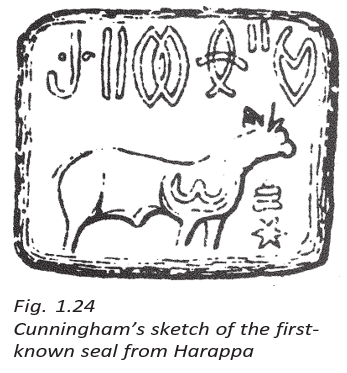
- Harappa did not fit: It was not on the pilgrims’ itineraries or known as an Early Historic city. A seal given to Cunningham by an Englishman could not be placed in his familiar time-frame.
- Limiting assumption: Like many others, Cunningham believed Indian history began with the first cities in the Ganga valley, so he missed Harappa’s significance.
A New, Ancient Civilisation
Recognition of the Harappan Civilisation
- Daya Ram Sahni: Found seals at Harappa in layers much older than Early Historic levels.
- Rakhal Das Banerji: Found similar seals at Mohenjodaro. The matching finds suggested both sites belonged to one archaeological culture.
- John Marshall: As Director-General of the ASI, announced the discovery of a new civilisation in the Indus valley in 1924.
- Mesopotamian connection: Similar, previously unidentified seals found at Mesopotamian sites showed that the Harappan civilisation was contemporaneous with Mesopotamia.
| Point | Cunningham | Marshall |
|---|---|---|
| Main focus | Early Historic and later periods; written sources and inscriptions | Spectacular finds as well as patterns of everyday life |
| Harappan evidence | Could not place the seal within his familiar historical framework | The discoveries at Harappa and Mohenjodaro established the significance of the seals |
| Archaeological approach | Sought artefacts he considered culturally valuable | First professional archaeologist to work in India; brought experience from Greece and Crete |
| Excavation method | — | Used regular horizontal units, often ignoring the mound’s stratigraphy |
| Significance | Did not identify Harappa as a much older civilisation | Announced the discovery of the Indus civilisation in 1924 |
Marshall’s Excavation Method
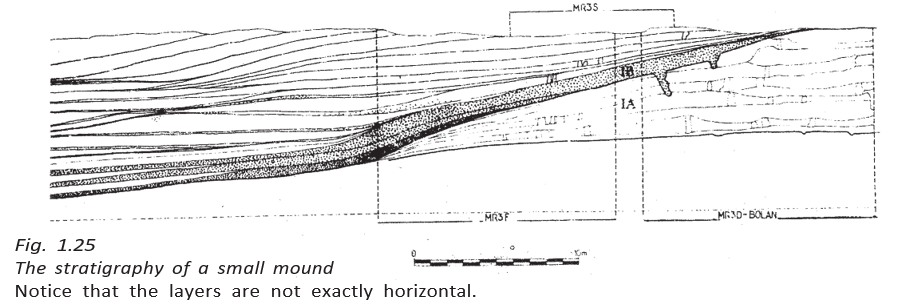
- Horizontal units: Marshall excavated in uniformly measured horizontal sections rather than following the actual layers.
- Loss of context: Finds from different stratigraphic layers could be grouped together, irretrievably losing information about where they were found.
Sites, Mounds and Layers
- Occupational debris
- Materials left through the production, use and discarding of objects and structures.
- Mound
- A build-up of occupational debris from repeated occupation and reuse of a place.
- Sterile layer
- A layer marking abandonment or desertion, identified by the absence of occupation traces.
- Stratigraphy
- The study of the layers at an archaeological site and their relative sequence.
- Cultural sequence
- The sequence of cultural periods at a site, inferred from artefacts found in its layers.
How Archaeological Layers Form and Are Read
- Formation: Repeated occupation builds up debris; abandonment lets wind, water and erosion alter the landscape.
- Occupation traces: Layers may differ in colour, texture and the artefacts they contain; sterile layers lack such traces.
- Relative age: In general, the lowest layers are oldest and the highest are most recent.
- Use: Artefacts assigned to layers help establish a site’s cultural sequence.
New Techniques and Questions
Wheeler and Stratigraphic Excavation
- R.E.M. Wheeler: Became Director-General of the ASI in 1944 and corrected the problem of excavating in uniform horizontal units.
- Method: He insisted that archaeologists follow the mound’s stratigraphy, preserving the relationship between artefacts and their layers.
- Approach: Wheeler brought military precision to archaeological practice.
Partition and the Search for Harappan Sites
- Harappan civilisation frontiers had little or no connection with present-day national boundaries.
- After partition and the creation of Pakistan, the major known sites lay in Pakistan.
- Indian archaeologists intensified efforts to locate and investigate Harappan settlements in India.
- An extensive survey in Kutch revealed Harappan settlements; explorations in Punjab and Haryana added sites.
- Discoveries and excavations included Kalibangan, Lothal, Rakhigarhi and, more recently, Dholavira; exploration continues.
Changing Research Questions and Methods
- Research questions: Archaeologists study cultural sequences, why particular sites were located where they were, and what purposes artefacts served.
- Since the 1980s: International interest has grown, with specialists from the subcontinent and abroad working jointly at Harappa and Mohenjodaro.
- Modern evidence gathering: Surface exploration and scientific analysis examine traces of clay, stone, metal, plants and animals, as well as other available evidence.
Milestones in the Discovery and Study of the Harappan Civilisation
- c. 6th century BCE–4th century CEThe Early Historic period, the main period of interest to Cunningham.
- 4th–7th centuries CEChinese Buddhist pilgrims visited the subcontinent; Cunningham later used their accounts to locate early settlements.
- Mid-19th centuryCunningham led ASI investigations but did not recognise the antiquity of Harappan artefacts.
- Early decades of the 20th centuryDaya Ram Sahni and Rakhal Das Banerji found similar seals at Harappa and Mohenjodaro.
- 1924John Marshall announced the discovery of a new civilisation in the Indus valley.
- 1944R.E.M. Wheeler became Director-General of the ASI and emphasised excavation according to stratigraphy.
- Since the 1980sInternational collaboration and modern scientific methods have expanded Harappan research.
Why did Cunningham fail to recognise the importance of Harappa?
How did Wheeler improve archaeological excavation?
What is stratigraphy, and why is it important?
Quick recap
- Cunningham’s focus on Early Historic and later periods, written sources and the Ganga valley led him to miss Harappa’s significance.
- Sahni and Banerji found similar seals at Harappa and Mohenjodaro, pointing to a shared archaeological culture.
- Marshall announced the Indus civilisation in 1924; similar seals linked it with contemporaneous Mesopotamia.
- Stratigraphy studies archaeological layers; lower layers are generally older and help establish cultural sequences.
- Wheeler promoted stratigraphic excavation after becoming Director-General of the ASI in 1944.
- Surveys in Kutch, Punjab and Haryana, along with later international scientific collaboration, expanded the study of Harappan sites.
Problems of Piecing Together the Past
Material Evidence and Its Limits
Classifying Archaeological Finds
Interpreting Harappan Religious Evidence
| Evidence | Interpretation | |
|---|---|---|
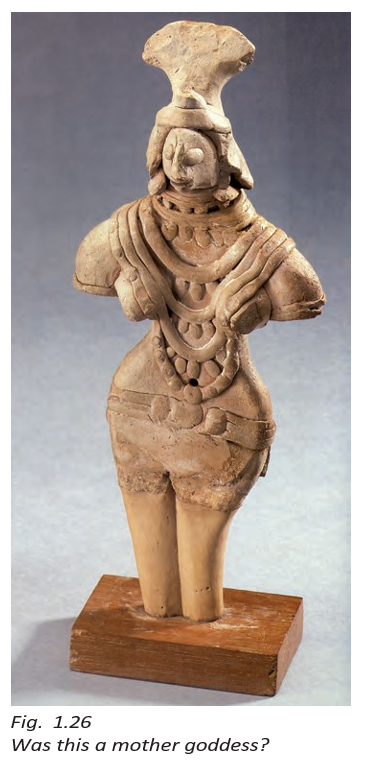
| Female figurines | Terracotta figures, some heavily jewelled and wearing elaborate headdresses | Mother goddesses |
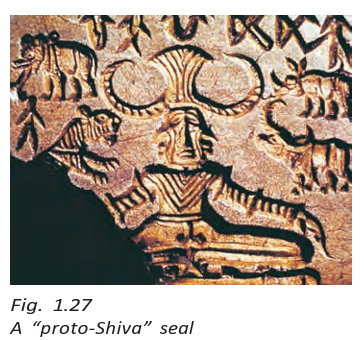
| Seated seal figure | A cross-legged figure surrounded by animals | “Proto-Shiva” or, in another scholarly view, a shaman |
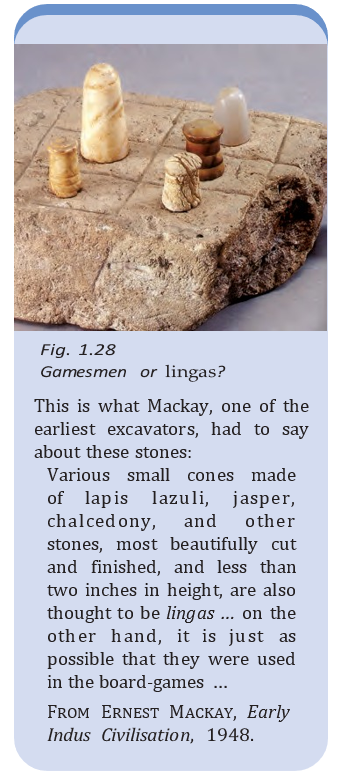
| Conical stone objects | Polished or cone-shaped stone objects | Lingas; some stone pieces have also been suggested as game pieces |
| Great Bath and fire altars | Structures at Mohenjodaro, Kalibangan and Lothal | Structures assigned ritual significance |
- Linga
- A polished stone worshipped as a symbol of Shiva.
- Shaman
- A person who claims magical and healing powers and the ability to communicate with the other world.
- Proto-Shiva
- A proposed early form of Shiva, used by some scholars to identify the seated figure on a Harappan seal.
- Frame of reference
- A context or comparison that helps make an artefact understandable.
Why Religious Reconstructions Remain Uncertain
- Known to unknown: Archaeologists often interpret the past by comparing it with the present or with later traditions.
- Limits of analogy: This approach is persuasive for familiar objects such as pots and querns, but more speculative when applied to religious symbols.
- Rigveda comparison: The Rigveda, compiled c. 1500–1000 BCE, mentions Rudra, a name later used for Shiva in Puranic traditions of the first millennium CE.
- Mismatch: Rigvedic Rudra is not described as Pashupati or as a yogi, so the seal figure does not clearly match the Rigvedic description.
- Open possibility: Some scholars have therefore suggested the seated figure might represent a shaman instead.
Do not present identifications such as “mother goddess,” “priest-king” or “proto-Shiva” as established facts; they are interpretations of archaeological evidence.
What Archaeology Has Revealed—and What Remains Unanswered
Major Periods in Early Indian Archaeology
- 2 million BP (Before Present)Lower Palaeolithic
- 80,000 BPMiddle Palaeolithic
- 35,000 BPUpper Palaeolithic
- 12,000 BPMesolithic
- 10,000 BPNeolithic; early agriculturists and pastoralists
- 6,000 BPChalcolithic; first use of copper
- 2600 BCEHarappan civilisation
- 1000 BCEEarly iron and megalithic burials
- 600 BCE–400 CEEarly Historic
Dates in the archaeological periods are approximate and mark the earliest evidence for each phase; developments varied across the subcontinent.
Major Developments in Harappan Archaeology
- 1875Alexander Cunningham reports on a Harappan seal.
- 1921Daya Ram Sahni begins excavations at Harappa.
- 1922Excavations begin at Mohenjodaro.
- 1946R.E.M. Wheeler excavates at Harappa.
- 1955S.R. Rao begins excavations at Lothal.
- 1960B.B. Lal and B.K. Thapar begin excavations at Kalibangan.
- 1974M.R. Mughal begins explorations in Bahawalpur.
- 1980A German and Italian team begins surface explorations at Mohenjodaro.
- 1986An American team begins excavations at Harappa.
- 1990R.S. Bisht begins excavations at Dholavira.
- 1997Amrendra Nath starts excavations at Rakhigarhi.
- 2013Vasant Shinde begins archaeogenetic research at Rakhigarhi.
How do archaeologists infer an artefact’s function?
Why are claims about Harappan religion often speculative?
Quick recap
- Harappan life is reconstructed mainly from material remains, whose survival and discovery are selective.
- Artefact function is inferred from material, analogy, context and indirect evidence.
- Religious labels such as “mother goddess” and “proto-Shiva” are hypotheses, not certainties.
- The Rigvedic description of Rudra does not clearly match the seated seal figure identified by some as proto-Shiva.
- Archaeology has revealed much about the Harappan economy and society, but script, gender and religious questions remain open.
- Archaeological dates are approximate, and Harappan research developed through successive excavations and studies.
History — ALL CHAPTERS
1
BRICKS, BEADS AND BONES THE HARAPPAN CIVILISATION
2
KINGS, FARMERS AND TOWNS EARLY STATES AND ECONOMIES (C. 600 BCE-600 CE)
3
KINSHIP, CASTE AND CLASS EARLY SOCIETIES (C. 600 BCE-600 CE)
4
THINKERS, BELIEFS AND BUILDINGS CULTURAL DEVELOPMENTS (C. 600 BCE - 600 CE)
1
THROUGH THE EYES OF TRAVELLERS PERCEPTIONS OF SOCIETY (C. TENTH TO SEVENTEENTH CENTURY)
2
BHAKTI- SUFI TRADITIONS CHANGES IN RELIGIOUS BELIEFS AND DEVOTIONAL TEXTS (C. EIGHTH TO EIGHTEENTH CENTURY)
3
AN IMPERIAL CAPITAL VIJAYANAGARA (C. FOURTEENTH TO SIXTEENTH CENTURY)
4
PEASANTS, ZAMINDARS AND THE STATE AGRARIAN SOCIETY AND THE MUGHAL EMPIRE (C. SIXTEENTH- SEVENTEENTH CENTURY)
1
COLONIALISM AND THE COUNTRYSIDE EXPLORING OFFICIAL ARCHIVES
2
REBELS AND THE RAJ THE REVOLT OF 1857 AND ITS REPRESENTATIONS
3
MAHATMA GANDHI AND THE NATIONALIST MOVEMENT CIVIL DISOBEDIENCE AND BEYOND
4
FRAMING THE CONSTITUTION THE BEGINNING OF A NEW ERA