Class 10 . Social Science . India And Contemporary World II . The Rise of Nationalism in Europe
Chapter 1: THE RISE OF NATIONALISM IN EUROPE
Ch 1
Social Science
Class 10
 Class 10 · Mathematics
Study Notes · Maths
Polynomials
2 lectures · Quick-revision notes · tap the buttons to check yourself
Introduction
Polynomials, Degree and Types
Values and Zeroes of a Polynomial
Evaluate $p(x)=x^2-3x-4$ at $x=2,0,-1,4$ and identify its zeroes.
- Substitute $x=2$.$$p(2)=2^2-3(2)-4=4-6-4=-6$$
- Substitute $x=0$.$$p(0)=0^2-3(0)-4=-4$$
- Substitute $x=-1$.$$p(-1)=(-1)^2-3(-1)-4=1+3-4=0$$
- Substitute $x=4$.$$p(4)=4^2-3(4)-4=16-12-4=0$$
Geometrical Meaning of Zeroes
A polynomial of degree $n$ has at most $n$ zeroes, since its graph can intersect the $x$-axis at at most $n$ points.
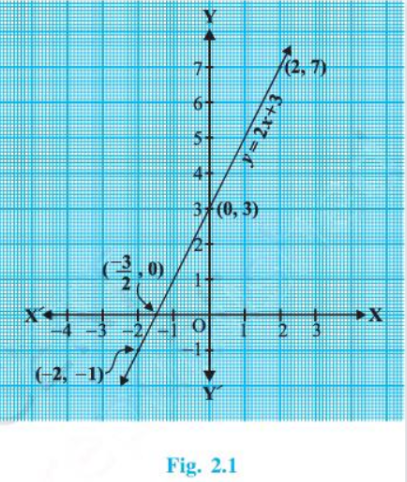
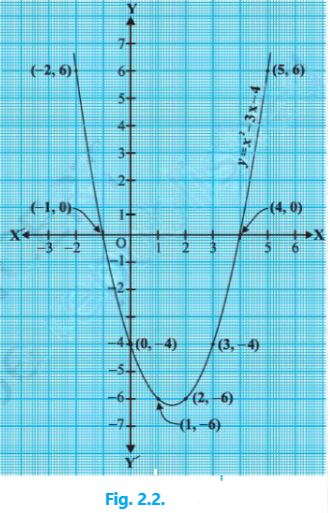
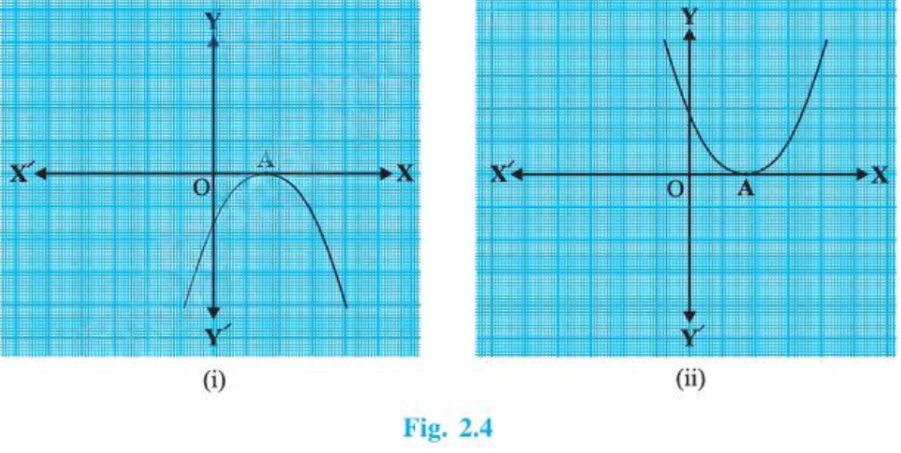
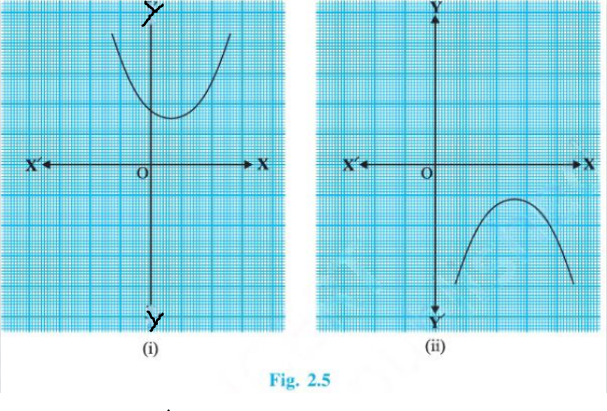
How many zeroes does each of the six polynomial graphs have?
- Count the $x$-axis intersections for each graph.$$(i)\ 1,\quad (ii)\ 2,\quad (iii)\ 3$$
- Continue counting the distinct intersection points.$$(iv)\ 1,\quad (v)\ 1,\quad (vi)\ 4$$
Relations Between Zeroes and Coefficients
For zeroes $\alpha,\beta$ of $ax^2+bx+c$, where $a
e0$.
For zeroes $\alpha,\beta,\gamma$ of $ax^3+bx^2+cx+d$, where $a
e0$.
Verify the coefficient relations for $x^2-3x-4$.
- Read the coefficients and zeroes.$$a=1,\quad b=-3,\quad c=-4,\quad \alpha=-1,\quad \beta=4$$
- Check the sum relation.$$\alpha+\beta=-1+4=3=-\frac{-3}{1}=-\frac{b}{a}$$
- Check the product relation.$$\alpha\beta=(-1)(4)=-4=\frac{-4}{1}=\frac{c}{a}$$
Find the degree of $7u^6-\frac{3}{2}u^4+4u^2+u-8$.
Find the zeroes of $x^3-4x$.
A quadratic graph touches the $x$-axis at exactly one point. How many distinct zeroes does it have?
Quick recap
- The degree is the largest exponent with a non-zero coefficient; degrees $1,2,3$ are linear, quadratic and cubic.
- A real number $k$ is a zero of $p(x)$ exactly when $p(k)=0$.
- Graphically, zeroes are the $x$-coordinates where $y=p(x)$ meets the $x$-axis.
- A quadratic can have two, one (coincident), or no real zeroes; a degree-$n$ polynomial has at most $n$ zeroes.
- For $ax^2+bx+c$, the zeroes have sum $-b/a$ and product $c/a$.
- For $ax^3+bx^2+cx+d$, the zeroes have sum $-b/a$, pairwise-product sum $c/a$, and product $-d/a$.
Relationship Between Zeroes And Coefficients Of A Polynomial
Quadratic Polynomials
Zero of a polynomial — A number $r$ is a zero of $p(x)$ if $p(r)=0$.
For $p(x)=ax^2+bx+c$, where $a
e0$, if its zeroes are $\alpha$ and $\beta$, their sum is $-b/a$ and their product is $c/a$.
Use these relationships to verify zeroes or construct a quadratic polynomial.
Use the quadratic relationships
- For a given polynomial, identify $a$, $b$, and $c$.$$p(x)=ax^2+bx+c$$
- Find the zeroes by factoring or another suitable method.$$p(x)=0$$
- Calculate their sum and product, then compare with the coefficient formulas.$$\alpha+\beta\quad\text{and}\quad\alpha\beta$$
- To construct a polynomial from a sum and product, choose $a=1$ unless another leading coefficient is required.$$x^2-(\alpha+\beta)x+\alpha\beta$$
Find the zeroes of $x^2+7x+10$ and verify the relationships between the zeroes and coefficients.
- Factor the polynomial to find its zeroes.$$x^2+7x+10=(x+2)(x+5)=0$$
- Set each factor equal to zero.$$x=-2\quad\text{or}\quad x=-5$$
- Compare the sum of the zeroes with $-b/a$.$$-2+(-5)=-7=-\frac{7}{1}$$
- Compare their product with $c/a$.$$(-2)(-5)=10=\frac{10}{1}$$
Do not drop the negative sign in the sum formula: the sum is $-b/a$, while the product is $c/a$.
Find the zeroes of $x^2-3$ and verify the coefficient relationships.
Find a quadratic polynomial whose zeroes have sum $-3$ and product $2$.
Cubic Polynomials
Cubic zeroes — The zeroes of a cubic polynomial are the values of $x$ that make the polynomial equal to zero; a cubic has at most three zeroes.
For $p(x)=ax^3+bx^2+cx+d$, where $a
e0$, and zeroes $\alpha$, $\beta$, and $\gamma$, the sum, pairwise-product sum, and product of the zeroes follow the coefficient relationships below.
Verify cubic zeroes and coefficients
- Identify the coefficients $a$, $b$, $c$, and $d$.$$p(x)=ax^3+bx^2+cx+d$$
- Substitute each proposed zero into $p(x)$ and check that the result is zero.$$p(\alpha)=p(\beta)=p(\gamma)=0$$
- Calculate the sum, the sum of pairwise products, and the product of the zeroes.$$\alpha+\beta+\gamma,\quad\alpha\beta+\beta\gamma+\gamma\alpha,\quad\alpha\beta\gamma$$
- Compare these values with the three coefficient relationships.$$-\frac{b}{a},\quad\frac{c}{a},\quad-\frac{d}{a}$$
Verify that $3$, $-1$, and $-\frac13$ are the zeroes of $3x^3-5x^2-11x-3$, then verify the coefficient relationships.
- Substitute the first two proposed zeroes into the polynomial.$$p(3)=81-45-33-3=0,\quad p(-1)=-3-5+11-3=0$$
- Check the third proposed zero; the cubic term is negative because $3(-1/3)^3=-1/9$.$$p\left(-\frac13\right)=-\frac19-\frac59+\frac{11}{3}-3=-\frac23+\frac{11}{3}-3=0$$
- Calculate the sum of the zeroes and compare with $-b/a$.$$3+(-1)-\frac13=\frac53=-\frac{-5}{3}$$
- Calculate the sum of pairwise products and compare with $c/a$.$$3(-1)+(-1)\left(-\frac13\right)+\left(-\frac13\right)3=-3+\frac13-1=-\frac{11}{3}$$
- Calculate the product and compare with $-d/a$.$$3(-1)\left(-\frac13\right)=1=-\frac{-3}{3}$$
For $2x^3-5x^2-14x+8$, verify the coefficient relationships if the zeroes are $4$, $-2$, and $\frac12$.
Quick recap
- For $ax^2+bx+c$, the sum of the zeroes is $-b/a$ and their product is $c/a$.
- A monic quadratic with zeroes' sum $S$ and product $P$ is $x^2-Sx+P$.
- For $ax^3+bx^2+cx+d$, the sum of the zeroes is $-b/a$.
- The sum of pairwise products of cubic zeroes is $c/a$.
- The product of cubic zeroes is $-d/a$.
Formula sheet
Social Science — ALL CHAPTERS
1
RESOURCES AND DEVELOPMENT
2
FOREST AND WILDLIFE RESOURCES
3
WATER RESOURCES
4
AGRICULTURE
5
MINERALS AND ENERGY RESOURCES
6
MANUFACTURING INDUSTRIES
7
LIFELINES OF NATIONAL ECONOMY
1
POWER SHARING
2
FEDERALISM
3
GENDER, RELIGION AND CASTE
4
POLITICAL PARTIES
5
OUTCOMES OF DEMOCRACY
1
THE RISE OF NATIONALISM IN EUROPE
2
NATIONALISM IN INDIA
3
THE MAKING OF A GLOBAL WORLD
4
THE AGE OF INDUSTRIALISATION
5
PRINT CULTURE AND THE MODERN WORLD
1
DEVELOPMENT
2
SECTORS OF THE INDIAN ECONOMY
3
MONEY AND CREDIT
4
GLOBALISATION AND THE INDIAN ECONOMY
5
CONSUMER RIGHTS